Select the type of weight stability interval:
Current average weight:
Weight stability interval:

Select an objective:
Units:
Minimum value:
Maximum value:
Most preferred
Attribute values:
Select an objective:
Update performances
Remove alternative
Select an objective:
Select the type of weight stability interval:
Weight stability interval:
Non-dominated
alternatives
Potentially optimal
alternatives
Pairwise dominance
values
Attribute list:
Attribute ranking:
Label:
Name:
Description:
Units:
Minimum value:
Maximum value:
Most preferred
Insert attribute value (label):
Attribute values:
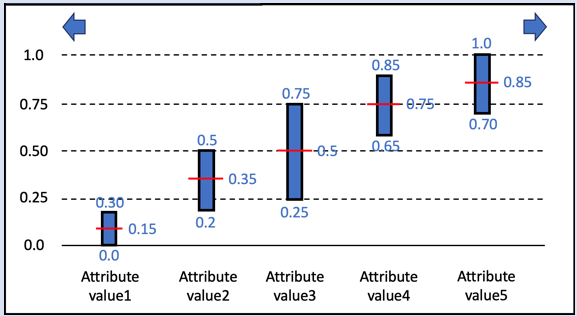
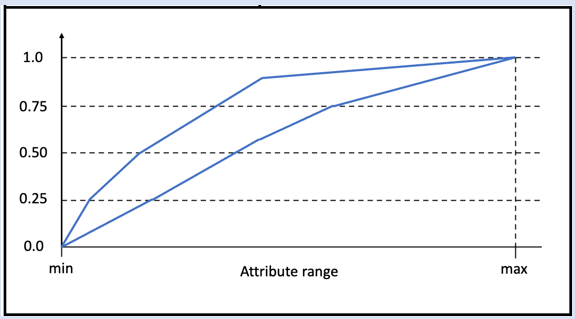
Attribute name:
Select the type of weight stability interval:
Weight stability interval:


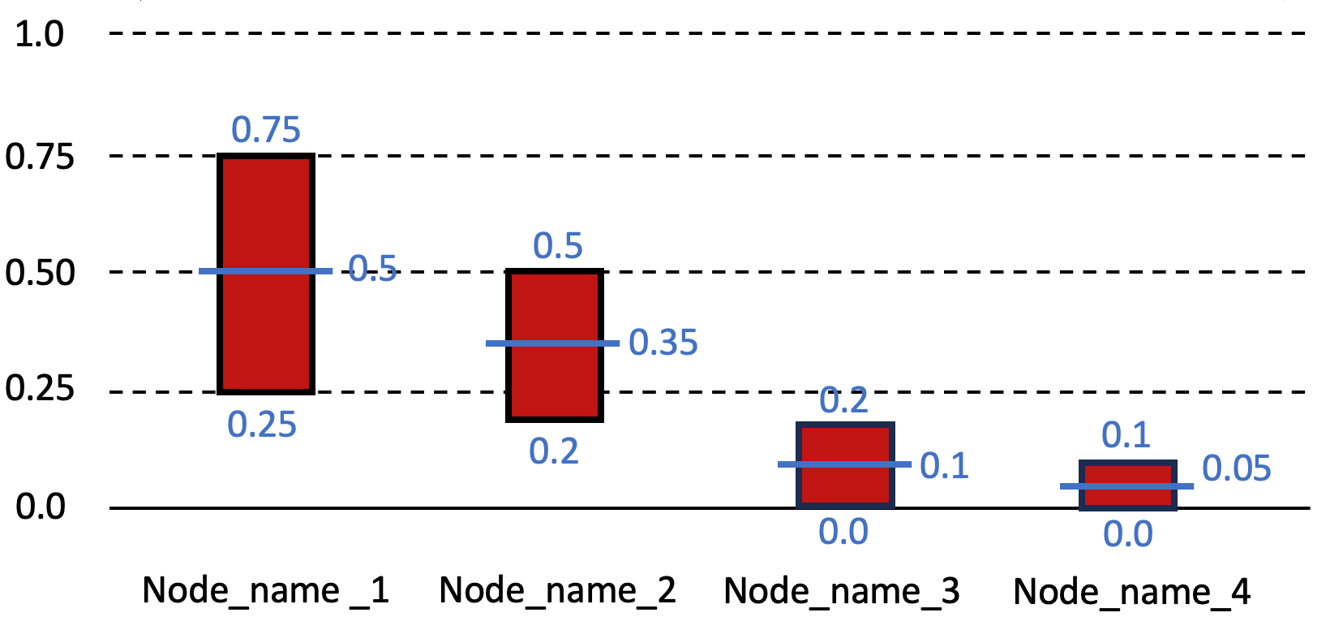
Descendent node
(
(
(
(
(
Imprecise weights
,
,
,
,
,
)
)
)
)
)
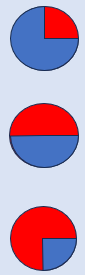
Provide a probability interval for p for which you are indifferent between the lottery and the sure performances:
p
1 - p
~
with p in ( , )
Objective list:
Objective ranking
Information of the strength of the differences between the weights of the consecutive objectives in the ranking.
Objective ranking
Differences
Ranking of differences
Objective ranking
Attribute Name:
Range:
(Probability Dist.
Param. 1
Param. 2
Discrete values
Alternative Name:
Alternative performance:
Range
Probability Dist.
Param. 1
Param. 2
Discrete values
Objective:

WEB-MAUT-DSS
The WEB-MAUT-DSS was designed and implemented by Prof. Antonio Jiménez Martín and Alberto Gómez Jiménez
Daniel Fernández Gómez, Daniel Fernández-Pello, Alejandro M. Hernández Segovia, Chenhao Hu, Alberto Pérez Conti, Carlos E. Pérez Núñez, and Jorge Verdugo Arroyo contributed to the development of various functionalities of WEB-MAUT-DSS as part of their Bachelor’s theses at the Universidad Politécnica de Madrid.
The WEB-MAUT-DSS was developed using Shiny-RStudio . It is free for academic purposes
The development of WEB-MAUT-DSS was supported by the grants PID2021-122209OB-C31, RED2022-134540-T and PID2024-155179NB-C22 funded by MICIU/AEI/10.13039/501100011033.
Alternative Name:
Alternative performance:
Range
Probability Dist.
Param. 1
Param. 2
Discrete values
Evaluate the difference between the most important attribute and the least important attribute